The Trump administration may cut funding for two major direct-air-capture plants
At least tens of millions of dollars are on the line for big carbon removal projects in Louisiana and Texas.
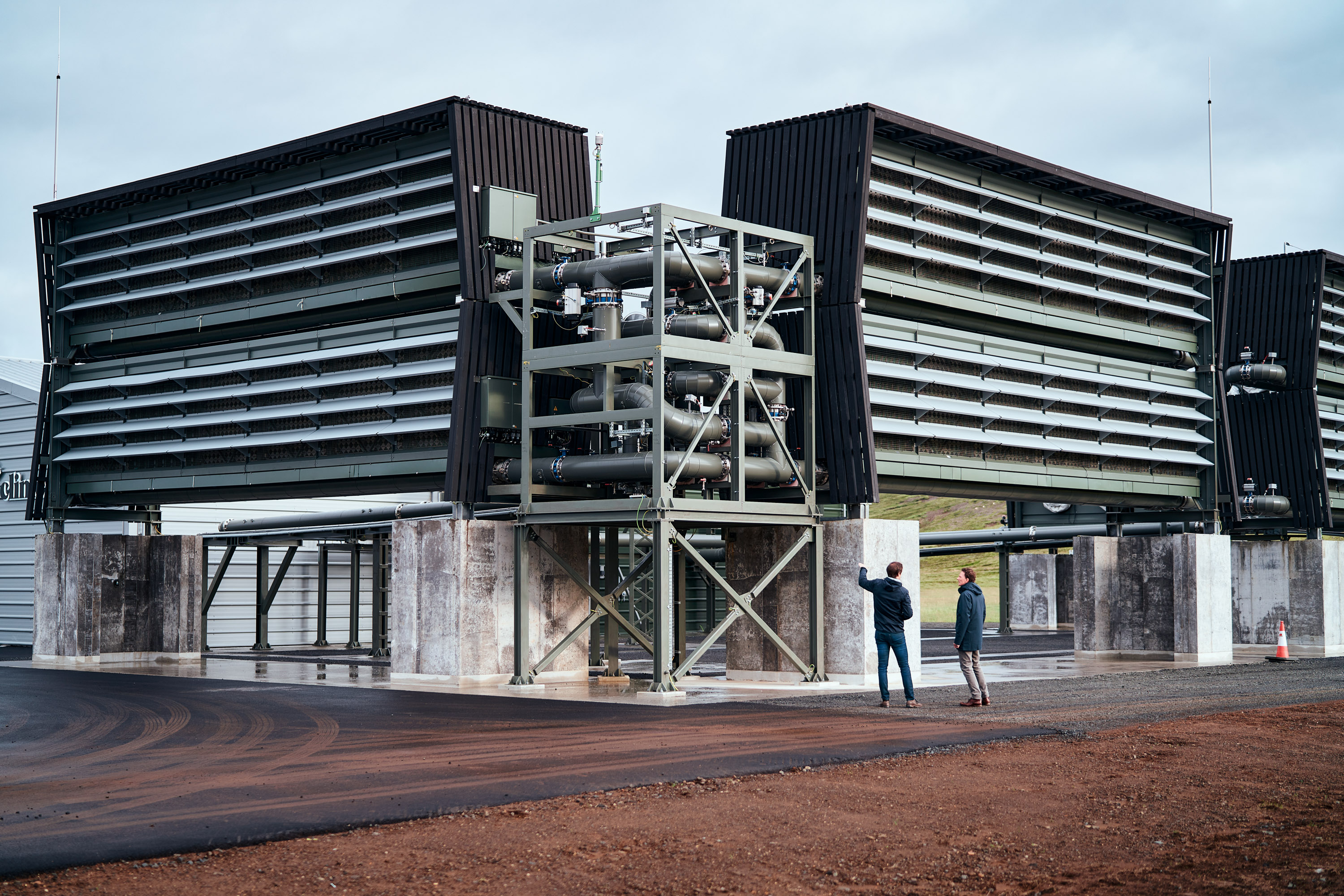
The US Department of Energy appears poised to terminate funding for a pair of large carbon-sucking factories that were originally set to receive more than $1 billion in government grants, according to a department-issued list of projects obtained by MIT Technology Review and circulating among federal agencies.
One of the projects is the South Texas Direct Air Capture Hub, a facility that Occidental Petroleum’s 1PointFive subsidiary planned to develop in Kleberg County, Texas. The other is Project Cypress in Louisiana, a collaboration between Battelle, Climeworks, and Heirloom.
The list features a "latest status" column, which includes the word "terminate" next to the roughly $50 million award amounts for each project. Those line up with the initial tranche of Department of Energy funding for each development. According to the original announcement in 2023, the projects could have received $500 million or more in total grants as they proceeded.
It’s not clear if the termination of the initial grants would mean the full funding would also be canceled.
“It could mean nothing,” says Erin Burns, executive director of Carbon180, a nonprofit that advocates for the removal and reuse of carbon dioxide. “It could mean there's a renegotiation of the awards. Or it could mean they’re entirely cut. But the uncertainty certainly doesn’t help projects.”
A DOE spokesman stressed that no final decision has been made.
"It is incorrect to suggest those two projects have been terminated and we are unable to verify any lists provided by anonymous sources,” Ben Dietderich, the department’s press secretary, said in an email, adding: “The Department continues to conduct an individualized and thorough review of financial awards made by the previous administration.”
Last week, the DOE announced it would terminate about $7.5 billion in grants for more than 200 projects, stating that they "did not adequately advance the nation’s energy needs, were not economically viable, and would not provide a positive return on investment of taxpayer dollars."
Battelle and 1PointFive didn’t respond to inquiries from MIT Technology Review.
“Market rumors have surfaced, and Climeworks is prepared for all scenarios,” Christoph Gebald, one of the company’s co-CEOs, said in a statement. He added later: “The need for DAC is growing as the world falls short of its climate goals and we’re working to achieve the gigaton capacity that will be needed.”
“We aren’t aware of a decision from DOE and continue to productively engage with the administration in a project review,” Heirloom said in a statement.
The rising dangers of climate change have driven the development of the direct-air-capture industry in recent years.
Climate models have found that it may be necessary to suck down billions of tons of carbon dioxide per year by around midcentury, on top of dramatic emissions cuts, to prevent the planet from warming more than 2 °C over preindustrial levels.
Direct air capture is considered one of the most reliable ways of drawing the greenhouse gas out of the atmosphere, but it also remains one of the most expensive and energy-intensive methods.
Under former president Joe Biden, the US began providing increasingly generous grants, subsidies, and other forms of support to help scale up the nascent sector.
The grants now in question were allocated under the DOE’s Regional Direct Air Capture Hubs program, which was funded through the Bipartisan Infrastructure Law. The goal was to set up several major carbon removal clusters across the US, each capable of sucking down and sequestering at least a million tons of the greenhouse gas per year.
“Today’s news that a decision to cancel lawfully designated funding for the [direct-air-capture projects] could come soon risks handing a win to competitors abroad and undermines the commitments made to businesses, communities, and leaders in Louisiana and South Texas,” said Giana Amador of the Carbon Removal Alliance and Ben Rubin of the Carbon Business Council in a joint statement.
This story was updated to include additional quotes, a response from the Department of Energy, and added context on the development of the carbon removal sector.
Deep Dive
Climate change and energy
The snow gods: How a couple of ski bums built the internet’s best weather app
“We were just trying to create something that made us happy.”
This startup claims it can stop lightning and prevent catastrophic wildfires
But researchers aren’t as confident as the company.
This company claims a battery breakthrough. Now they need to prove it.
Let’s talk about Donut Lab’s solid-state batteries.
Brutal times for the US battery industry
Investors are pulling back and companies are going under. What comes next?
Stay connected
Get the latest updates from
MIT Technology Review
Discover special offers, top stories, upcoming events, and more.