A cell that does it all
For 25 years, embryonic stem cells have been promising and controversial in equal measure. How far have they really come?
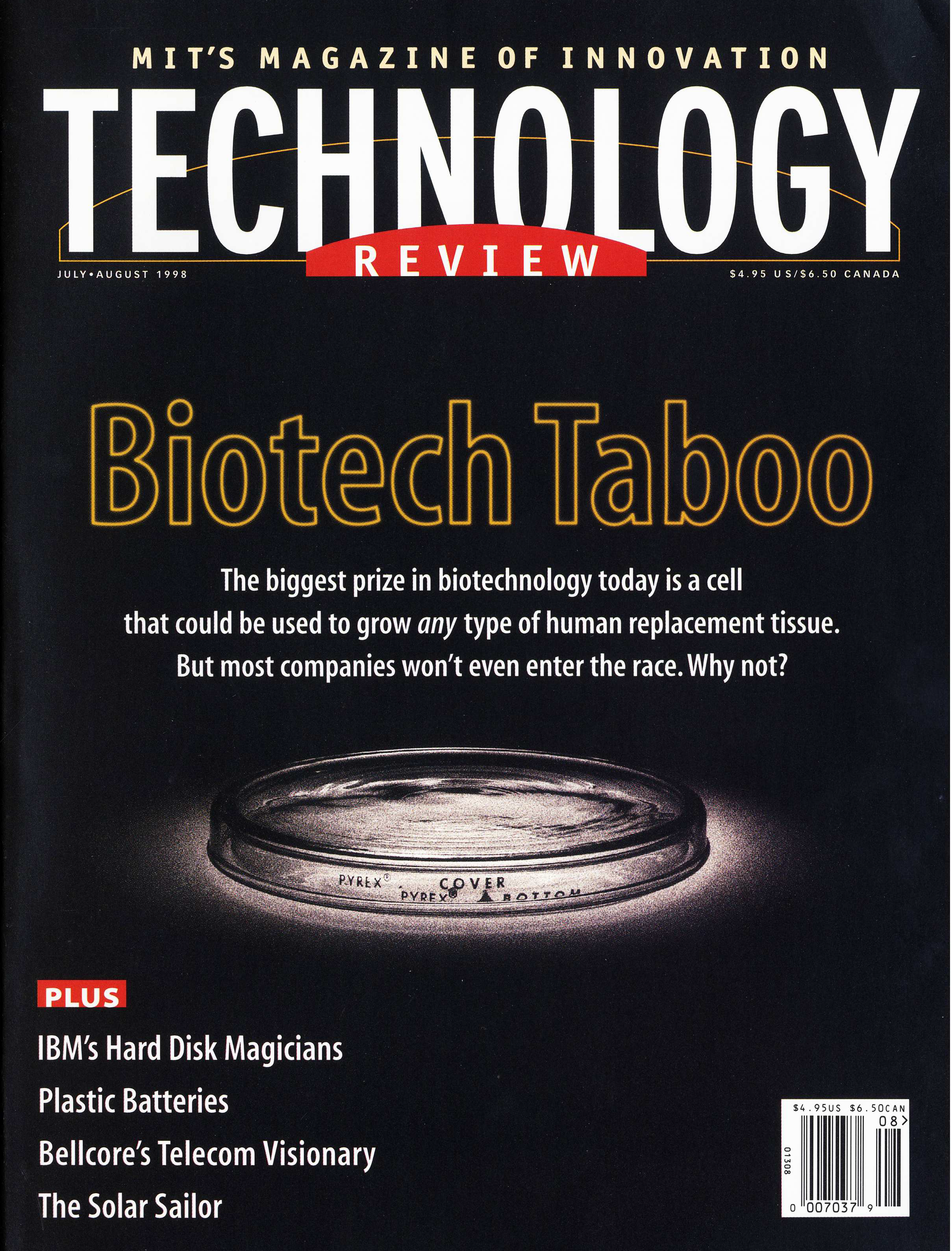
From “The Troubled Hunt for the Ultimate Cell” (1998), by Antonio Regalado: “If awards were given for the most intriguing, controversial, underfunded and hush-hush of scientific pursuits, the search for the human embryonic stem (ES) cell would likely sweep the categories. It’s a hunt for the tabula rasa of human cells—a cell that has the potential to give rise to any of the myriad of cell types found in the body. If this mysterious creature could be captured and grown in the lab, it might change the face of medicine, promising, among other remarkable options, the ability to grow replacement human tissue at will … [but] these cells are found only in embryos or very immature fetuses, and pro-life forces have targeted the researchers who are hunting for ES cells, hoping to stop their science cold. In addition, the federal government has barred federal dollars for human embryo research, pushing it out of the mainstream of developmental biology. To make matters worse, human ES cells could conceivably provide a vehicle for the genetic engineering of people, and the ethical dilemmas surrounding human cloning threaten to spill over onto this field.”
Update from the author (2023): The debate lasted years, but science prevailed over religion in the stem-cell wars of the early 2000s. Now research on ES cells is paid for by the US government. Yet biology keeps offering surprises. The latest? Research shows stem cells in the lab can self-assemble back into “synthetic” embryos, shockingly similar to the real thing. And that’s the next debate.
Deep Dive
Biotechnology and health
Inside the stealthy startup that pitched brainless human clones
A woman’s uterus has been kept alive outside the body for the first time
The team behind the feat plan to study uterine disorders and the early stages of pregnancy—and potentially grow a human fetus.
Peptides are everywhere. Here’s what you need to know.
The compounds have exploded in popularity, but big questions about safety and effectiveness are still unresolved.
This scientist rewarmed and studied pieces of his friend’s cryopreserved brain
A gerontologist wanted his preserved brain to be reanimated. Cryopreservation is more likely to be used on organs for transplantation.
Stay connected
Get the latest updates from
MIT Technology Review
Discover special offers, top stories, upcoming events, and more.